
Search
The 2026 Kyoto Prize
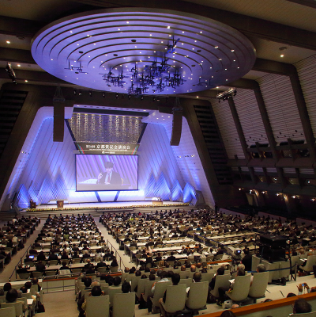
Commemorative lectures by Kyoto Prize laureates are held in Kyoto. These lectures provide an opportunity to get to know not only the achievements of the laureates but also their views on life and personalities. The laureates, who have reached the pinnacles of their respective fields, talk about their research, art and life with various episodes. Please come and join us.
*Please note that we will not be accepting any on-site registrations on the day of the event.
2026
11 /11 Wed
13:00 - 16:10
Place: Kyoto International Conference Center
Capacity:1,500 persons (FCFS)
Languages:Simultaneous interpretation is provided.
Admission Free
The 2026 Kyoto Prize Kyoto Prize Laureates
Lecture topics
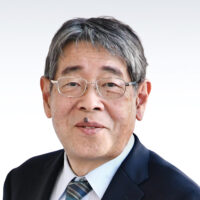
50 Years of Research at the Interface of Light and Electrochemistry
Abstract of the lecture
I began research on photovoltaics based on metal halide perovskite semiconductors in 2006. Following our 2012 publication on the all-solid-state perovskite solar cell technology, research accelerated worldwide, and power conversion efficiencies rapidly improved to rival those of the highest-performing crystalline silicon solar cells that have long led the industry. In this lecture, as the background of this invention, I will first outline the earlier research in photoelectrochemistry that I have pursued since my student years, and then introduce the unique characteristics of perovskite solar cells, review recent progress toward their industrial commercialization, and discuss the future explored by this technology.
Lecture topics
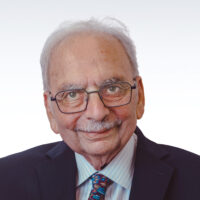
From Microbial Loop to Microbial Structuring of Marine Ecosystems
Abstract of the lecture
The global ocean accounts for nearly half of Earth’s photosynthesis, generating immense biomass that fuels marine food webs. Understanding how this organic matter is processed is critical for understanding how marine ecosystems function and how the ocean regulates Earth’s carbon and nutrient cycles. Classical views emphasized the grazing food chain from phytoplankton to zooplankton and higher organisms. Our experiments revealed that a substantial fraction of primary production is released as dissolved organic matter and is rapidly assimilated by abundant free-living bacteria. Grazing by bacterivorous protists returns this bacterial biomass to the particulate food web and regenerates nutrients to sustain primary production, forming Microbial Loop. In this lecture, I will trace the discoveries that established the microbial loop, transformed our understanding of carbon and nutrient cycling, and led to a new view of microbes as architects of marine ecosystem structure. Building on these discoveries, the lecture concludes by exploring how micro-scale interactions among microbes and organic matter give rise to ecosystem scale processes across the global ocean.

Lecture topics
A Sky Full of Teachers
Abstract of the lecture
Since I was a child, I have loved the sky. Growing up in the flatlands of the Midwest, where sky was one hundred and eighty degrees of our world, the sky was a constant and magical living reminder of freedom and energy. It was the symbol of the boundless resources we have as artists. The sky is often a character in my work as an artist and the engine behind it.
I am always looking for teachers. And if I can define what I’m really looking for it comes down to one word: freedom. I have tried to study how to be free and I’ve tried to put it into practice.
As a musician I am always working with time—ways to cut it, frame it, stretch it. I’m also always trying to frame love. The greatest teacher is music itself. Hector Berlioz wrote, “Love can give no idea of music, but music can give an idea of love.”
I try to be a good student of these things. In my talk, “A Sky Full of Teachers,” I’ll describe what I mean by the sky as my basic resource and inspiration. And I’ll tell you about my adventures as I’ve looked everywhere for teachers, as well as some of the pitfalls, mistakes, and revelations I’ve discovered in the many side trips I’ve taken along the way.
| 12:00 | Doors Open |
| 13:00 | Opening Opening Address Shinobu Inamori-Kanazawa(President of the Inamori Foundation) |
| 13:05 approx. | Kyoto Prize Commemorative Lecture in Advanced Technology Tsutomu Miyasaka “50 Years of Research at the Interface of Light and Electrochemistry” |
| 14:00 approx. | Kyoto Prize Commemorative Lecture in Basic Sciences Farooq Azam “From Microbial Loop to Microbial Structuring of Marine Ecosystems” |
| Intermission | |
| 15:15 approx. | Kyoto Prize Commemorative Lecture in Arts and Philosophy Laurie Anderson “A Sky Full of Teachers” |
| 16:10 approx. | Closing |
*After each lecture, interviewer Mayuko Ishii (former NHK announcer / freelance) will ask the laureates about the lecture and their views on life from the audience’s perspective.
*Please note that the closing time of the lecture may change slightly depending on the progress of the event on the day.
Organized by Inamori Foundation
Supported by Kyoto Prefectural Government, Kyoto City Government, Kyoto Prefectural Board of Education, Kyoto City Board of Education, Kyoto Private High School Federation, The Consortium of Universities in Kyoto, Kyoto Chamber of Commerce and Industry, The Kyoto Shimbun, The Asahi Shimbun, The Mainichi Newspapers, The Yomiuri Shimbun, Nihon Keizai Shimbun, The Sankei Shimbun, Kyodo News, Jiji Press, NHK, Kyoto Broadcasting System, α-STATION FM KYOTO
Contact
Please direct all queries to the secretariat of the Kyoto Prize in Congrès Inc.
E-mail: kyoto-prize-lecture@congre.co.jp